

 Kashifa Jafar
Technology Writer & Contributor
Kashifa Jafar is a technology writer and
contributor with 4+ years of experience
creating clear and reader-friendly
technology content.
Read Full Bio of Author →
 Sameena Begum
Technology & Digital
Content Reviewer
Sameena Begum is a technology and digital content reviewer who reviews selected articles to help ensure that information is presented clearly, accurately, and responsibly.
Read Full Bio of Reviewer →
Table of Contents
Introduction
Biometric Technology is the technical term for body capacities, calculations, and human characteristics. Biometric authentication is a form of identification and access control.
As biometric identifiers are exclusive to individuals, they are considered more reliable for verifying one’s identity than modern token-based identification systems, such as a passport, and knowledge-based identification systems, such as a password. However, there are privacy issues and other downsides to using biometrics.
What is Biometric Data use for?
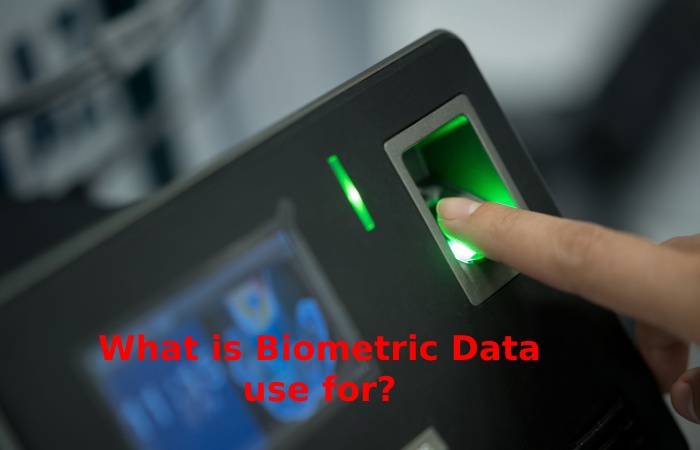
Biometric data is used to recognize or authenticate a person using physical characteristics. The use of biometrics is based on the uniqueness, permanence, and collectability of the trait being measured, for example, the fingerprint. Once the trait is measure, the live information can be compared to the biometric database.
Typical uses of biometric identification systems are:
- Law enforcement: fingerprint, palm print, and also facial appreciation.
- Control: Electronic passports use fingerprint, facial, iris, or voice recognition.
- Health care: National identity cards for identification and also health insurance programs use fingerprints.
- Credit card companies: Credit card companies can use voice recognition to define if the being on the phone is who they are.
The Indian Unique Identification Authority of the India Aadhaar program is an example of a nation that uses biometric identification extensively. It is a multi-step biometric authentication program incorporating iris scanners, fingerprints, and also facial recognition. Once enrolled, the biometric data is linked to a smart card issue to each of India’s 1.2 billion residents.
Biometric technology is one of several innovations driving digital transformation, alongside other emerging technology trends that are reshaping businesses and consumer experiences.
How Does Biometrics Work?
If you’ve ever used facial recognition technology to unlock your Apple iPhone, you’ve used biometric authentication. Again, Apple is recording your biometric data, in this case, your face, and storing it on your phone as a biometric pattern and then comparing it to live information every time you unlock it.
Before using a biometric system, an individual must be enroll. Therefore the enrollment process gathers a measure of the trait and stores it in a database as a biometric template. The template is compare to the live biometric data in subsequent uses. For example, you’re going through the enrollment process when you get a new iPhone and add your face to Face ID.
Financial institutions and government agencies commonly rely on eKYC biometric devices to streamline identity verification and reduce fraud.
After enrollment, biometric systems tend to work in one of two modes:
- Biometric Authentication: An individual compares captured biometric data with an individual’s biometric template to verify that the individual is the individual they claim to be. It is similar to logging into an account with a username and password.
- Biometric Identification: A one-to-many matching design to identify an unknown individual. The person is determine if the system can match the biometric sample to a saved template within an acceptable threshold. An example of biometric ID is using an attacker’s entering pattern or IP attribution as part of digital forensics.
Ensuring storage and retrieval is crucial for a biometric system to be consider robust. Biometric authentication and also identification are becoming more common in security systems, consumer electronics, and point-of-sale applications.
Two things drive this, security and suitability. With biometrics, there are no passwords to recall or security tokens to lose. However, if biometrics are co-operate, there is no way to convert it, unlike a password.
Researchers believe that the latest breakthroughs in quantum computing could significantly influence the future of biometric security and encryption technologies.
What can be use for Biometrics?
Many different features of physiology, chemistry, or behavior can be use as biometrics. The selection of a biometric data must weigh the following seven factors:
- Universality: Does everyone who uses the system have the trait?
- Uniqueness: Is the trait sufficiently different for characters in the relevant population to distinguish them from one another?
- Permanence: Does the trait vary over time?
- Measurability: Is it easy to acquire or measure the trait?
- Performance: Is the technology use accurate, fast, and robust?
- Acceptability: How will individuals in the relevant population accept the technology and the capture and evaluation of their biometric data?
- Circumvention: Is it easy to fake the trait with an artifact or substitute?
That said, proper biometric use is highly application-dependent. What may be an acceptable risk to a consumer’s phone may be unacceptable to the US Department of Homeland Security or the NYPD.
Modern authentication systems are increasingly being integrated into augmented reality applications to create more secure and personalized digital experiences.
Types of Biometrics
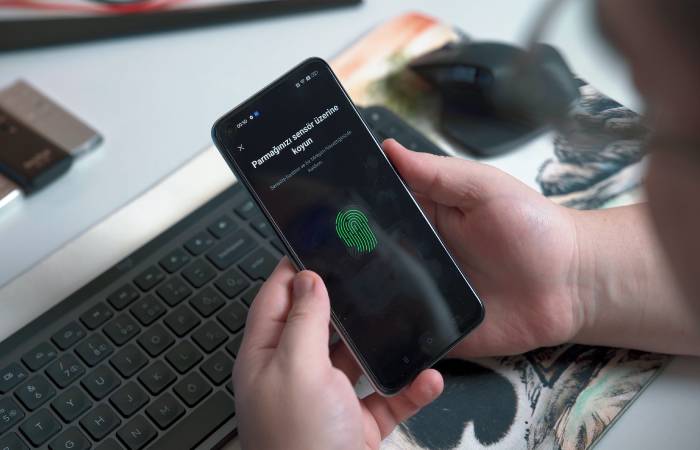
Biometric identifiers are divide into physiological characteristics and behavioral characteristics:
- Physiological factors: are related to the shape of the body.
- Behavioral characteristics: relate to a person’s behavior.
- Fingerprints: Fingerprint scanners have become abundant in recent years due to their widespread smartphone implementation.
- Iris scans: The shape of a person’s eye can be use as biometric data.
- DNA: DNA is primarily use by the police to identify suspects.
- Vein Patterns: Vein patterns can be use like fingerprints or iris scans.
As virtual worlds continue to expand, biometric authentication may become essential for maintaining identity verification and security in the metaverse.
Conclusion: Biometric Technology
Biometrics are the biological measurements or physical characteristics used to identify people. While fingerprint classification, facial recognition, and retina scans are all forms of biometric technology, they’re also the most well-known options.The growth of biometric solutions is being accelerated by 5G technology advancements, which enable faster and more reliable real-time data processing.
Kashifa Jafar is a technology writer and contributor with 4+ years of experience covering AI, cloud computing, mobile technology, software, networking, cybersecurity, and emerging technology.
View Author Profile →
Sameena Begum is a technology and digital content reviewer who reviews selected articles to help ensure that information is presented clearly, accurately, and responsibly.
View Reviewer Profile →