
Ethereum is a digital platform that adopts blockchain technology and expands its use to various applications. Ether, its native cryptocurrency, is the second largest on the market. The Ethereum platform was created in 2015 by the programmer Vitalik Buterin to create an instrument for decentralized and collaborative applications.
Ether (ETH), its native cryptocurrency, is a token that can be used in transactions using this software. Like , Ether is part of an autonomous peer-to-peer financial system, free from government intervention. Also, like bitcoin, the value of Ether skyrocketed in a short time.
Table of Contents
What is Ethereum?
Ethereum is a decentralized, open-source blockchain platform that allows developers to build and run applications without relying on a central authority. Unlike Bitcoin, which was designed mainly as digital money, Ethereum was built to be a programmable blockchain.
At its core, Ethereum enables smart contracts and decentralized applications (dApps).
Key Components of Ethereum
| Component | Description | Main Function | Why It Matters |
| Blockchain | A decentralized digital ledger that records all Ethereum transactions | Stores transaction data permanently and securely | Ensures transparency, security, and immutability |
| Ether (ETH) | Ethereum’s native cryptocurrency | Pays transaction (gas) fees, staking, and value transfer | Powers the network and incentivizes validators |
| Smart Contracts | Self-executing programs stored on the blockchain | Automatically execute agreements when conditions are met | Removes intermediaries and increases trust |
| Validators (Proof of Stake) | Participants who stake ETH to secure the network | Verify and add new blocks to the blockchain | Maintain network security and consensus |
| Gas Fees | Transaction fees paid in ETH | Compensate validators for processing transactions | Prevent network spam and allocate resources |
| Decentralized Applications (dApps) | Applications built on Ethereum’s blockchain | Provide services like DeFi, NFTs, gaming | Enable Web3 ecosystem growth |
| Ethereum Virtual Machine (EVM) | The runtime environment for smart contracts | Executes contract code across the network | Ensures programs run consistently on all nodes |
| Tokens (ERC Standards) | Digital assets created using Ethereum standards (ERC-20, ERC-721, etc.) | Represent currencies, NFTs, governance tokens | Enables ecosystem expansion and interoperability |
How does Ether Work?
| Function | How Ether Works | Why It’s Important | Resource Link |
| Transaction Payments | ETH is used to send value from one wallet to another on the Ethereum blockchain. | Enables peer-to-peer digital payments without banks. | https://ethereum.org/en/eth/ |
| Gas Fees | Every transaction or smart contract action requires “gas,” paid in ETH to validators. | Prevents spam and compensates network validators. | https://ethereum.org/en/developers/docs/gas/ |
| Smart Contract Execution | ETH fuels the execution of smart contracts on the Ethereum Virtual Machine (EVM). | Powers decentralized applications (dApps). | https://ethereum.org/en/developers/docs/smart-contracts/ |
| Staking (Proof of Stake) | Users lock up (stake) ETH to become validators and help secure the network. | Maintains network security and earns staking rewards. | https://ethereum.org/en/staking/ |
| Store of Value | ETH can be held as a digital asset similar to digital gold. | Used as an investment and hedge within crypto markets. | https://ethereum.org/en/eth/ |
| Collateral in DeFi | ETH is often used as collateral in decentralized finance platforms. | Enables lending, borrowing, and yield farming. | https://ethereum.org/en/defi/ |
| Token Creation Support | ETH supports token standards (ERC-20, ERC-721, etc.). | Powers NFTs, stablecoins, and other blockchain assets. | https://ethereum.org/en/developers/docs/standards/tokens/ |
| Network Incentives | Validators earn ETH rewards for proposing and validating blocks. | Encourages honest participation in the network. | https://ethereum.org/en/developers/docs/consensus-mechanisms/pos/ |
How to Trade with Ether?
| Step / Aspect | What It Means | Tools / Options | Resource Link (Learn More) |
| Check Current Price | Know how much 1 ETH is worth in USD/INR before trading | Live price varies; e.g., ~$2,013 USD per ETH (≈ current market) | CoinGecko Ethereum Price ● https://www.coingecko.com/hi/coins/ethereum/usd |
| Choose a Trading Platform | Decide where you’ll trade ETH | Centralized Exchanges (CEX) like Binance, Coinbase, Kraken; Decentralized Exchanges (DEX) | Crypto trading guide ● https://www.coininsider.com/cryptocurrency/altcoins/ethereum/trading/ |
| Create & Verify Account | Sign up and complete identity checks on a CEX | Binance, Kraken, Coinbase | Coinbase, Binance fee guide ● https://www.btcc.com/en-IN/square/investinghaven/768801 |
| Fund Your Account | Add money (INR/USD/Stablecoin) to trade ETH | Bank transfer, card, P2P, crypto deposit | How to buy ETH ● https://www.lbank.com/hi/how-to-buy/ethereum |
| Choose Trading Pair | Select which market you’ll trade ETH in | ETH/USDT, ETH/USD, ETH/BTC | ETH trading pairs (MEXC example) ● https://www.mexc.co/hi-IN/price/ETH/info |
| Spot Trading | Buy/sell ETH directly at the market price | Simple buy or sell orders | Ethereum Trading Guide ● https://www.coininsider.com/cryptocurrency/altcoins/ethereum/trading/ |
| Margin / Futures Trading | Trade with leverage (higher risk and reward) | ETH futures / perpetual contracts on exchanges | Kraken ETH trading products ● https://www.kraken.com/hi-in/prices/ethereum |
| Set Orders & Risk Limits | Use market/limit orders & stop-loss to manage risk | Limit order, stop-loss, take profit | Crypto Trading Basics 📹 YouTube Tutorial |
| Use a Wallet for Safety | Move ETH to your wallet after trading | MetaMask, Trust Wallet (non-custodial) | Get ETH guide (wallet info) ● https://ethereum.org/hi/get-eth/ |
| Monitor Fees | Know what you pay per trade | Exchange fees (~0.1–0.5%), gas fees on DEX | Fee tips & comparisons ● https://www.coininsider.com/cryptocurrency/altcoins/ethereum/trading/ |
| Understand Risks | Crypto markets are volatile; prices move fast | Possible losses, scams, leverage risks | Investing mistakes article (general crypto risk) |
Is Ethereum a Good Investment?
| Aspect | Positive / Pros | Negative / Cons | Further Reading / Resource Links |
| Utility & Use Case | Leader in smart contract platforms, powering DeFi, NFTs, Web3 apps — strong real economic activity and adoption. | Broader utility also means complexity — risk for bugs and implementation issues in smart contracts. | Ethereum investment overview — https://investinghaven.com/crypto-blockchain/coins/is-ethereum-a-good-investment-7-factors-every-investor-should-know/ |
| Consensus & Efficiency | PoS upgrade makes it more energy-efficient; staking rewards available for holders. | PoS and upgrade roadmap are complex; delays or issues could affect confidence. | Ethereum PoS/staking effects — https://theinvestmentlist.com/how-to-buy-ethereum-pros-cons-of-investing/ |
| Developer Ecosystem | One of the largest developer communities in crypto, boosting innovation and resilience. | Competition from other smart-contract platforms (e.g., Solana, Cardano) could erode market share. | Pros & cons guide — https://youlives.com/is-ethereum-a-good-investment-pros-and-cons/ |
| Supply Mechanism | EIP-1559 burn mechanism introduces deflationary pressure by burning part of fees, potentially supporting price over time. | Supply isn’t strictly capped like Bitcoin, so inflation dynamics vary with network use. | EIP-1559 explained — https://theinvestmentlist.com/how-to-buy-ethereum-pros-cons-of-investing/ |
| Institutional & ETF Interest | Spot-ETH ETFs and institutional flows can increase demand and credibility. | Regulatory uncertainty (SEC, global rules) may impact access or price discovery. | ETF and adoption context — https://investinghaven.com/crypto-blockchain/coins/is-ethereum-a-good-investment-7-factors-every-investor-should-know/ |
| Volatility & Risk | High volatility means opportunity for substantial returns for active investors or long-term holders. | High volatility → large price swings and potential losses; not suited for low-risk investors. | Risk discussion — https://youlives.com/is-ethereum-a-good-investment-pros-and-cons/ |
| Security & Technical Risks | Large ecosystem attracts innovation and economic activity. | Smart contract exploits and DeFi hacks occur; security is always evolving. | Tech risk context — https://cryptorbix.com/en/b/7-reasons-why-ethereum-is-a-good-investment-in-2025 |
| Long-Term Growth Potential | Many analysts view ETH as having strong long-term potential due to adoption and network effects (e.g., forecasts from financial institutions). | Price outcomes are uncertain and vary widely between analysts; models differ greatly. — | Long-term forecast example — Reuters on Standard Chartered forecast (~$25,000 by 2028) https://www.reuters.com/business/standard-chartered-lifts-year-end-ether-forecast-7500-2025-08-13/ |
How to Invest in Ethereum
| Step / Component | What You Do | Price / Cost Context | Useful Resource Links |
| 1. Check ETH Price | Look up real-time Ethereum price before investing | ≈ $2,047 – $2,117 per 1 ETH at latest market data | CoinGecko ETH Price – https://www.coingecko.com/hi/coins/ethereum |
| 2. Choose a Platform | Pick an exchange / broker to buy ETH | Fees vary; compare before buying | How to buy ETH (LBank guide) – https://www.lbank.com/hi/how-to-buy/ethereum |
| 3. Create & Verify Account | Sign up and complete KYC/ID verification | May take a few hours | Exchange platform signup info |
| 4. Fund Your Account | Add currency (INR/USD) to your account | Bank transfer / card fees may apply | How to fund a crypto account (LBank) – https://www.lbank.com/hi/how-to-buy/ethereum |
| 5. Buy ETH (Spot Buy) | Place market or limit orders to purchase ETH | Buy at live price + fees | Buy ETH guide – https://www.lbank.com/hi/how-to-buy/ethereum |
| 6. Secure Your ETH | Transfer to a wallet you control (optional) | No cost except network (gas) fee | Wallets comparison (MetaMask/Trust Wallet) |
| 7. Long-Term Holding | Hold ETH for future growth | Price changes — may go up or down | ETH price forecast reference – https://cashkhabar.com/ethereum-price-prediction-2025/ |
| 8. Optional Staking | Stake ETH to earn rewards | Minimum ETH requirements & lock-up periods | Ethereum staking info |
| 9. Monitor & Rebalance | Track price and portfolio over time | Use price alerts / market tools | Live ETH chart – https://www.kraken.com/hi-in/prices/ethereum |
Ethereum Price Prediction Table (USD)
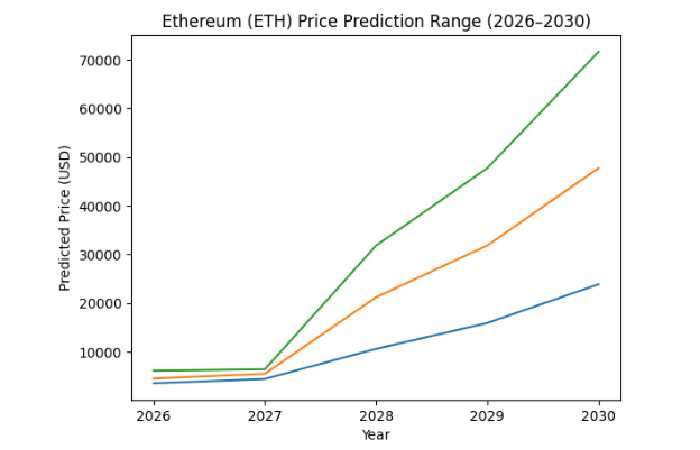
| Year | Low / Bearish Estimate | Average / Mid-Range Forecast | High / Bullish Target | Source / Notes |
| 2025 | $3,200 | ~$3,800 | $4,200 | Moderate projection range. |
| 2026 | $2,569 | ~$3,465 (short-term model) | ~$5,864 | Mixed forecasts with shorter and longer term models. |
| 2028 | — | — | ~$8,900 | Growth trends through 2028. |
| 2030 | ~$4,275 | ~$9,800–$12,400 | ~$15,000 | Consensus long-term growth but wide range. |
| 2040 | ~$7,270 | — | ~$30,000 | Long-range forecasts with high volatility. |
Real-Time & Extended Resources
Here are links to live or extended forecast tools:
🔗 Live ETH Price & Forecast Tools
- CoinCodex ETH Price Prediction — https://coincodex.com/crypto/ethereum/price-prediction (turn0search1)
- ETH Price Forecast & Charts — CoinMarketCap — https://coinmarketcap.com/academy/article/ethereum-price-prediction-what-could-affect-eths-future-price (turn0search2)
- Long-Term Forecasts (various models) — https://www.forbes.com/advisor/in/investing/cryptocurrency/ethereum-price-prediction/ (turn0search0)
Ethereum vs Bitcoin — Side-by-Side Comparison
| Feature | Bitcoin (BTC) | Ethereum (ETH) | Notes / Resource Links |
| Primary Purpose | Digital currency and store of value (“digital gold”) | Blockchain platform for smart contracts and dApps | Bitcoin & Ethereum comparison overview |
| Launch Year | 2009 | 2015 | Investopedia comparison |
| Creator | Satoshi Nakamoto | Vitalik Buterin & team | — |
| Consensus Mechanism | Proof of Work (PoW) | Proof of Stake (PoS) | Ethereum uses PoS after “Merge”; Bitcoin still PoW |
| Supply Limit | Fixed at 21 million BTC | No fixed cap (but supply burn mechanism via EIP-1559) | Supply policies differ |
| Transaction Speed | ~7 transactions/sec | ~12–30+ transactions/sec (with upgrades and Layer 2) | Transaction throughput varies |
| Typical Fees (USD) | ~$1–$5 (varies) | ~$0.8–$50+ (varies with network demand) | Fee behavior info |
| Smart Contracts | Not natively supported | Core functionality | Programmable ecosystem |
| Main Use Cases | Value storage, digital money | DeFi, NFTs, DAOs, utility tokens | Different ecosystem focus |
| Market Leadership | Largest market cap historically | 2nd largest crypto by market cap | — |
| Price (Indicative) | Check live data (e.g., ~BTC price changes relative to ETH) | Check live data (e.g., ETH to BTC rates) | Live conversion — 1 ETH ≈ 0.0297 BTC |
| ETH/BTC Conversion | — | ~0.0297 BTC per 1 ETH | ETH→BTC conversion link |
Conclusion
Ethereum is a decentralized, open-source blockchain with excellent agreement functionality. Ether is the native cryptocurrency of the platform. Among cryptocurrencies, Ether is next only to Bitcoin in market capitalization. Ethereum was perceive in 2013 by programmer Vitalik Buterin.