


The modern internet is built around metrics. Followers, engagement rates, watch time, rankings and algorithmic visibility define how digital communities operate. Every platform encourages measurement, comparison and performance scoring as if digital identity itself can be reduced to analytics dashboards.
But a growing number of internet-native communities are beginning to reject that structure entirely.
Concepts like crew disquantified org represent a broader shift toward post-metric digital culture — an online environment where participation matters more than visibility, collaboration matters more than performance and community value exists beyond algorithmic measurement.
Whether viewed as a symbolic framework, experimental digital philosophy, or decentralized internet concept, crew disquantified org reflects a larger cultural transition happening across online spaces today.
Table of Contents
What Does “Crew Disquantified Org” Mean?
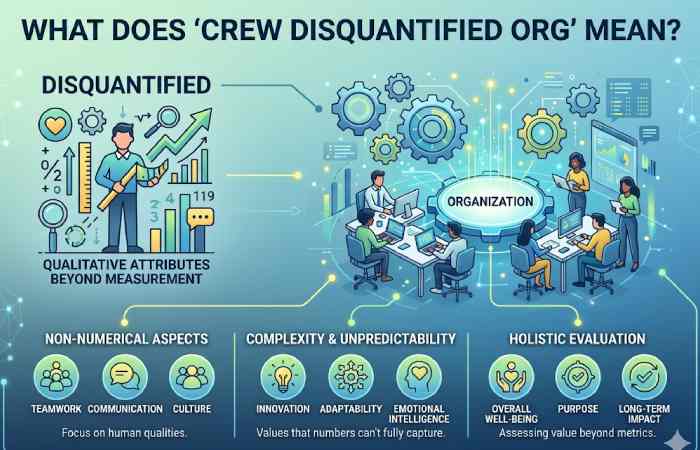
Crew disquantified org should probably be understood on a semantic, not a literal, level. This very pliability is what lends the keyword a certain conceptual power in a digital culture conversation.
Semantic Breakdown of the Phrase
| Term | Interpretation | Digital Meaning |
| Crew | Collaborative group or digital collective | Community-driven participation |
| Disquantified | Removal of metrics and scoring systems | Moving away from engagement obsession |
| Org | Organisational structure or decentralised framework | Collective internet governance |
Together, the phrase suggests a form of digital organisation that rejects traditional internet measurement systems.
Rather than prioritising:
- follower counts
- likes
- algorithmic visibility
- monetised engagement
the concept points toward:
- community-first interaction
- decentralised identity
- non-hierarchical collaboration
- post-analytics internet culture
This interpretation creates semantic depth far beyond a normal tech keyword.
The Rise of Post-Metric Internet Culture
For years, internet platforms trained users to equate visibility with value. Success online became tied to measurable signals:
- likes
- shares
- impressions
- engagement rates
- subscriber counts
- watch time
But constant measurement has also produced widespread digital exhaustion.
Why Users Are Becoming Tired of Metrics
| Internet Pressure | Psychological Effect |
| Engagement competition | Anxiety and comparison |
| Algorithm dependency | Creative burnout |
| Performance visibility | Social pressure |
| Constant optimisation | Mental fatigue |
| Public analytics | Identity commodification |
Modern users increasingly question whether algorithm-driven environments actually improve online communities or simply encourage endless performance behaviour.
This growing skepticism is fueling the rise of post-metric internet thinking.
Why Digital Communities Are Rejecting Quantification
The internet originally promised openness and creativity. Over time, however, many digital spaces evolved into systems dominated by visibility economics.
Online identity became increasingly quantified through:
- engagement scores
- creator rankings
- algorithmic reach
- monetisation metrics
As a response, many newer communities now prioritise:
- smaller networks
- privacy-first interaction
- anonymous participation
- collaborative environments
Examples of Emerging Post-Metric Spaces
| Platform Type | Why It Fits the Trend |
| Discord Communities | Community-first interaction |
| Fediverse Systems | Decentralised social networking |
| DAO Communities | Collaborative governance |
| Private Forums | Reduced public performance pressure |
| Encrypted Groups | Identity autonomy |
These environments often value participation quality over numerical visibility.
That shift aligns strongly with the broader interpretation of crew disquantified org.
How Crew Disquantified Org Reflects Decentralised Digital Thinking
One reason the keyword feels conceptually powerful is because it mirrors emerging decentralised internet philosophies.
Traditional internet platforms are heavily structured around hierarchy:
- platform ownership
- creator ranking
- algorithmic distribution
- monetisation systems
In contrast, post-metric digital communities explore alternative models.
Characteristics of Decentralised Digital Communities
| Traditional Platforms | Post-Metric Communities |
| Centralised authority | Distributed participation |
| Public identity pressure | Fluid identity structures |
| Engagement competition | Collaboration focus |
| Visibility hierarchy | Community contribution |
| Analytics obsession | Intentional interaction |
Within this framework, crew disquantified org becomes less about a literal organisation and more about a symbolic model for internet-native collaboration.
Post-Analytics Communities and the Future of Internet Identity
Digital identity is increasingly evolving beyond public-facing social metrics.
Younger online communities are experimenting with:
- pseudonymous participation
- private digital circles
- temporary identity structures
- decentralised reputation systems
This creates a future where identity may become less dependent on public validation.
Emerging Identity Trends Online
| Trend | Description |
| Pseudonymous Collaboration | Users interact without permanent identity exposure |
| Community-First Architecture | Smaller groups over mass audiences |
| Algorithm-Independent Interaction | Less reliance on platform feeds |
| Digital Autonomy | Greater control over online identity |
| Federated Social Systems | Decentralised communication structures |
These ideas connect strongly with Web3 culture, decentralised governance and post-platform internet thinking.
Crew Disquantified Org and the Anti-Algorithm Movement
A growing number of internet users are actively distancing themselves from algorithm-centric behaviour.
The anti-algorithm movement reflects frustration with:
- engagement farming
- viral-content pressure
- trend manipulation
- endless optimisation culture
Users increasingly want:
- slower internet experiences
- meaningful interaction
- creative independence
- reduced performance anxiety
Why Users Resist Algorithmic Culture
| Concern | User Response |
| Creator Burnout | Leaving performance-driven platforms |
| Trend Fatigue | Seeking niche communities |
| Surveillance Analytics | Prioritising privacy |
| Visibility Competition | Embracing smaller audiences |
| Endless Optimisation | Returning to authentic expression |
Crew disquantified org fits naturally into this broader anti-analytics conversation.
Could Crew Disquantified Org Represent a New Internet Philosophy?
In many ways, the phrase reflects a philosophical transition happening across digital culture.
The early internet valued experimentation, anonymity and exploration. Modern platforms often prioritise monetisation and algorithmic efficiency instead.
Post-metric concepts challenge that direction.
They ask:
- Can communities exist without engagement competition?
- Can creativity survive without algorithmic pressure?
- Can online identity exist outside measurable visibility?
Emerging Post-Platform Values
| Traditional Internet Goals | Post-Metric Goals |
| Virality | Authenticity |
| Growth optimisation | Community stability |
| Monetised attention | Collaborative value |
| Public performance | Private interaction |
| Competitive influence | Shared participation |
This philosophical shift gives conceptual keywords like crew disquantified org long-term semantic relevance.
How Younger Digital Communities View Metrics Differently

Gen Z internet culture increasingly values:
- authenticity
- privacy
- smaller communities
- selective participation
Unlike earlier internet eras that celebrated maximum visibility, many younger users now prefer controlled digital spaces.
Gen Z Digital Behaviour Trends
| Behaviour Shift | Meaning |
| Private Communities | Smaller trusted circles |
| Reduced Public Posting | Lower visibility pressure |
| Anonymous Accounts | Flexible identity exploration |
| Digital Burnout Awareness | Health-conscious internet habits |
| Authentic Interaction | Less performance behaviour |
This shift helps explain why anti-metric internet concepts resonate strongly among younger online communities.
The Psychological Impact of Quantified Internet Behaviour
The quantified internet has psychological consequences that extend far beyond technology.
Many users experience:
- engagement anxiety
- creator comparison cycles
- productivity pressure
- dopamine-driven behaviour loops
Constant exposure to measurable popularity can reshape how individuals view self-worth online.
Psychological Effects of Metric-Driven Platforms
| Platform Dynamic | Possible Effect |
| Like Counts | Validation dependency |
| Follower Comparison | Self-esteem pressure |
| Viral Competition | Burnout risk |
| Constant Notifications | Attention fragmentation |
| Engagement Tracking | Productivity obsession |
This overlap between technology, psychology and internet sociology makes post-metric digital culture increasingly relevant.
Crew Disquantified Org vs Traditional Social Platforms
The conceptual difference between post-metric communities and mainstream platforms is substantial.
| Feature | Crew Disquantified Org | Traditional Social Platforms |
| Main Purpose | Decentralized collaboration & creation based communities | Social networking, content posting, ads, building following |
| Platform Structure | Community-based, non-hierarchical, decentralized | Controlled and operated by businesses |
| Focus | Creativity, collaboration, common principles | Metrics such as followers, likes, reach, engagement, and money made |
| Success Measurement | Little emphasis on likes, views or metrics | Primarily focused on likes, reach, impressions and engagement. |
| User Identity | Pseudonymity or avatar-based | Uses real names or personal brands |
| Governance | Consensus voting and decentralized decision-making | Operated under the direction of the company and its leaders |
| Monetization | Community contribution and possibly optional tokens | Money is made through ads, subscription fees, and payment to the creators |
| Privacy Approach | Frequently web3/blockchain related | Collects data to be used for ads and personalization. |
| Typical Users | Artists, developers, Web3 creators, digital collectives | General public, influencers, businesses |
| Algorithm Dependence | Low or none | High dependence on recommendation algorithms |
| Collaboration Style | Open-source style collaboration | Competitive content creation |
| Examples | Disquantified communities, decentralized creative collectives | Facebook, Instagram, TikTok, X |
| Starter Pricing | Free or community-based; Team Disquantified Org Starter plan starts at $19/month | Mostly free with ad-supported usage |
| Professional Pricing | Pro: $49/month, Business: $99/month | Optional premium subscriptions like X Premium or Meta Verified |
| Resource Links | Team Disquantified Org Pricing, Crew Disquantified Org Overview | Facebook, Instagram, TikTok, X (Twitter) |
This comparison helps frame the keyword as a broader digital-culture framework rather than a conventional website or organization.
Could France Become a Hub for Decentralised Digital Culture?
France occupies an interesting position within discussions about decentralised internet culture.
European digital policy has increasingly emphasised:
- data privacy
- platform accountability
- digital rights
- algorithm transparency
The influence of GDPR and broader European privacy frameworks has encouraged stronger public discussions around digital autonomy.
Why France Fits Post-Metric Digital Trends
| Factor | Relevance |
| GDPR Culture | Privacy-focused internet thinking |
| Independent Tech Communities | Decentralised innovation interest |
| Digital Rights Discussions | Resistance to surveillance systems |
| European Platform Regulation | Alternative internet governance |
This makes France a meaningful localisation angle for discussions surrounding crew disquantified org and post-platform internet structures.
Potential Technologies Behind Post-Metric Communities
Although post-metric internet culture is philosophical, several technologies support its development.
Technologies Supporting Decentralised Communities
| Technology | Function |
| Blockchain Identity | Decentralised authentication |
| Federated Social Systems | Distributed communication |
| DAO Governance | Collective decision-making |
| Distributed Hosting | Reduced central control |
| Privacy-First Messaging | Secure interaction |
These technologies enable digital communities to function without relying entirely on traditional platform ecosystems.
Criticism of Anti-Metric Digital Communities
Balanced analysis is important because post-metric systems also face legitimate criticism.
Critics argue that fully decentralised communities may struggle with:
- moderation
- sustainability
- discoverability
- monetisation
- scalability
Challenges Facing Post-Metric Communities
| Challenge | Concern |
| Sustainability | Difficult long-term funding |
| Moderation | Harder governance structures |
| Discoverability | Reduced growth visibility |
| Monetisation | Fewer revenue systems |
| Scalability | Community fragmentation |
While post-metric communities sound appealing philosophically, practical implementation remains complex.
Why Crew Disquantified Org Matters in Future SEO and AI Search
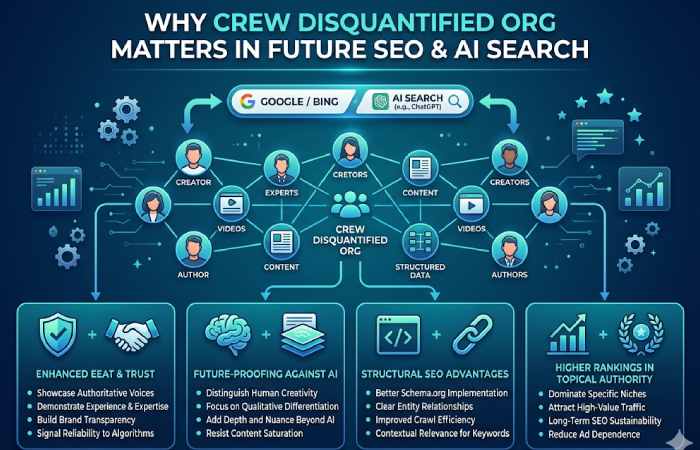
One reason conceptual keywords matter increasingly in SEO is because AI-driven discovery systems are evolving rapidly.
Traditional search focused heavily on:
- exact-match keywords
- backlinks
- ranking authority
Modern AI search increasingly values:
- semantic depth
- conceptual authority
- topical relationships
- perspective-driven content
Why Conceptual Authority Matters in AI Search
| SEO Evolution | Future Direction |
| Keyword Matching | Semantic understanding |
| Virality Signals | Contextual relevance |
| Platform Authority | Knowledge depth |
| Ranking Competition | Topic ownership |
That creates a major opportunity for unique keywords like crew disquantified org.
The first strong conceptual article often becomes the semantic anchor for future AI understanding.
Frequently Asked Questions
What is Crew Disquantified Org?
Crew Disquantified Org can be interpreted as a conceptual framework connected to post-metric digital communities, decentralised internet culture and anti-analytics online collaboration.
Is Crew Disquantified Org a real organisation?
The phrase appears more associated with conceptual digital-culture thinking than a conventional registered organisation.
What does “disquantified” mean online?
In digital culture, “disquantified” suggests reducing dependence on metrics, engagement scoring and algorithmic visibility systems.
Why are online communities rejecting metrics?
Many users experience burnout, comparison anxiety and algorithm fatigue from heavily quantified online environments.
Final Thoughts:
Crew disquantified org symbolises a broader digital transition away from algorithm-driven identity systems toward community-first internet culture where participation matters more than measurable visibility.
As internet users increasingly question surveillance-style analytics, engagement obsession and platform dependency, post-metric communities may become far more influential than they currently appear.
Whether viewed as a philosophical framework, digital-culture concept or decentralised internet narrative, crew disquantified org reflects a future where online interaction is defined less by performance metrics and more by collaborative human experience.